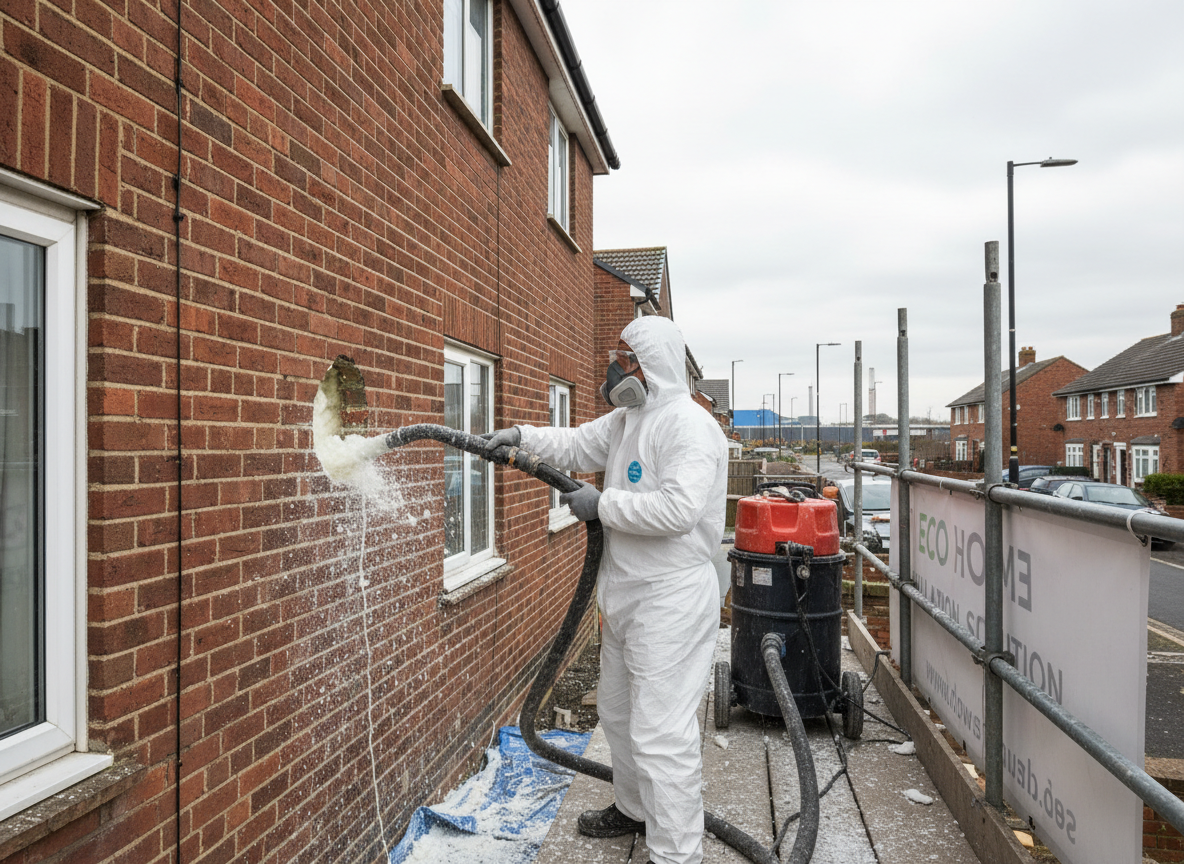
Cavity wall spray foam removal in Scunthorpe often involves properties built between the 1930s and 1970s where foam was injected to improve insulation. Over time the material can trap moisture against the inner brickwork, especially in homes near the former steelworks where industrial pollution has left walls more porous. Extraction requires cutting access points at regular intervals along the mortar joints and using negative-pressure equipment to pull out the foam without collapsing the cavity. Local conditions like frequent winter rainfall mean crews must work quickly to reseal the walls and restore ventilation before damp sets in again.
Edge cases appear regularly in terraced houses around Frodingham and Crosby where shared walls limit access and increase the risk of disturbing neighboring cavities. Technicians check for hidden services and older timber lintels that can be weakened by the original foam installation. Once the foam is cleared, the cavity is inspected with borescopes to confirm no residue remains that could block weep holes or create cold spots during cold snaps common in the region.
Regulation notes include ensuring the work complies with current building standards for reinstated wall ties and ventilation in North Lincolnshire homes. Homeowners should expect the process to generate dust and debris that must be contained, particularly when working near occupied spaces. FreshLayer Experts operates from Crown Buildings on Laneham Street and maintains 24/7 availability to respond when sudden damp issues arise after heavy rain.
Technician insight
In Scunthorpe, the thing that catches most people out with Cavity wall spray foam removal is the way older cavity walls around the steelworks area hold onto moisture through our wet winters, so any foam left behind quickly restarts damp problems once temperatures drop.
Cavity Foam Removal in a Crosby Semi
Homeowners noticed persistent damp patches on internal walls after a cold spell. Inspection showed spray foam blocking weep holes in the 1960s cavity construction. FreshLayer Experts created access points along the front elevation, extracted the foam under negative pressure, and cleared the cavity completely. Once dried and checked, the walls were left ready for normal ventilation to resume.
How it works
- 1
Initial Cavity Inspection
Technicians examine the external walls and drill small test holes to assess foam condition and cavity width.
- 2
Access Point Creation
Strategic mortar joints are removed to allow insertion of extraction tools while protecting the brick faces.
- 3
Foam Extraction
Specialized vacuum equipment pulls the foam from the cavity under controlled negative pressure.
- 4
Cavity Clearance and Drying
Remaining debris is cleared and the cavity is dried before any reinstatement work begins.
- 5
Final Wall Check
Borescope inspection confirms the cavity is clear and weep holes are unobstructed.
Pricing
Upfront quotes provided after on-site inspection; final cost depends on property size and foam condition.