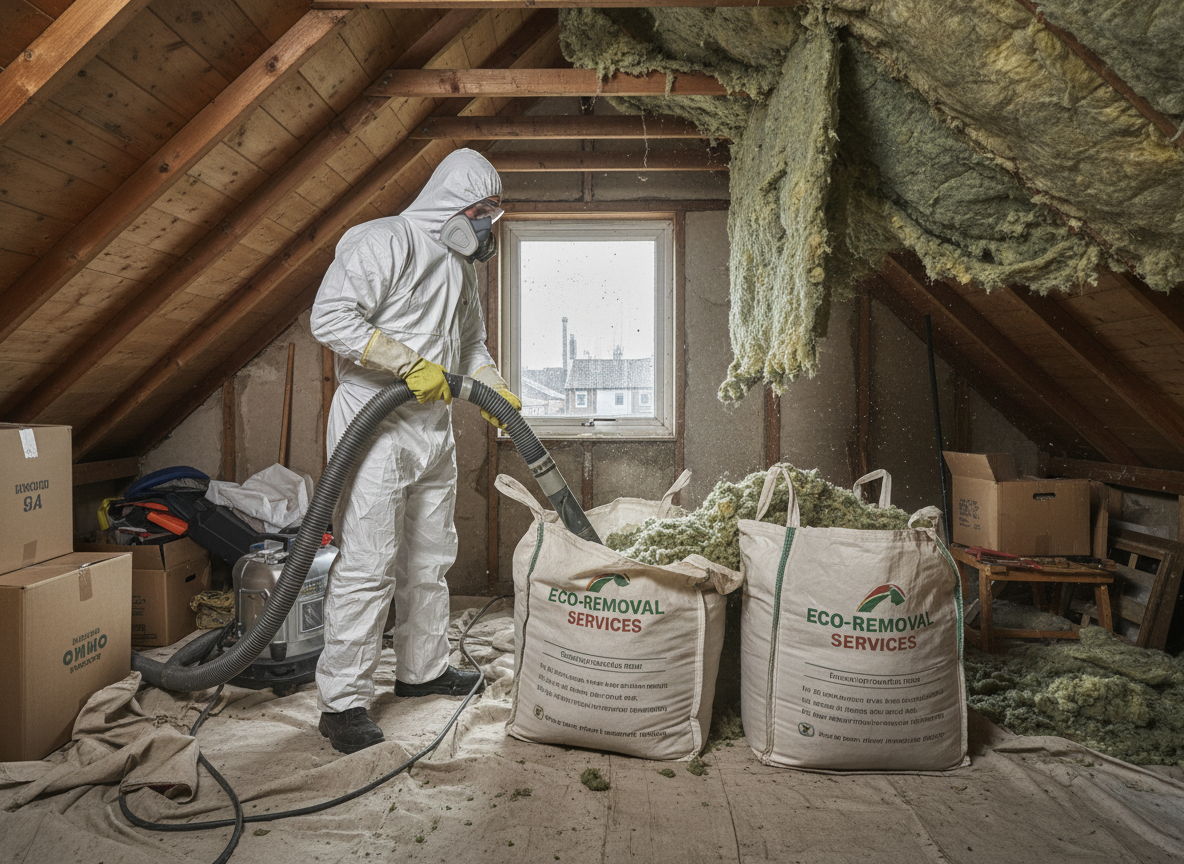
Scunthorpe's older terraced housing stock, particularly pre-1970 builds around the steelworks districts, often contains cavity fill that has degraded or caused ventilation problems. Removing spray foam in these homes requires isolating sections to prevent dust migration through shared walls and ensuring any residue does not affect remaining brickwork that may already show age-related movement. Crews work methodically to separate the material without forcing moisture deeper into the structure during the frequent damp spells typical of the region.
Environmentally friendly removal focuses on low-solvent techniques and contained extraction so waste can be processed through approved recycling routes rather than landfill. In North Lincolnshire properties, this often means dealing with foam that has bonded to timber joists or older plaster, where hasty pulling risks cracking lath and creating new repair work. Proper sequencing keeps airborne particles contained and allows inspection of the underlying fabric before any new insulation is considered.
Edge cases arise when foam has been applied over existing damp proof courses or in roof voids where access is limited by tight eaves common in local Victorian terraces. Technicians check for hidden electrical runs and pipework first, then use staged disassembly to avoid disturbing asbestos-containing materials sometimes present in mid-century ceilings. Final clearance includes vacuuming cavities to remove fine particles that could otherwise affect indoor air quality after the job is complete.
Technician insight
In Scunthorpe, the thing that catches most people out with environmentally friendly insulation removal is how the damp winters and older steelworker terraces let foam bond hard to brick and joists, so any rushed job leaves residue that later causes new moisture problems.
Crosby Terrace Extraction
Homeowner in Crosby reported musty air after prior cavity fill. Inspection showed spray foam trapping moisture against external walls. Material was extracted in controlled sections using contained methods, cavities were cleared and ventilation restored. The property now shows improved airflow without added damp issues.
How it works
- 1
Site Assessment
Inspect cavities, roof spaces and walls to map foam extent and note any moisture or structural concerns typical in Scunthorpe terraces.
- 2
Containment Setup
Install dust barriers and negative air equipment to protect living areas during extraction.
- 3
Material Removal
Use low-impact mechanical and manual methods to separate foam while preserving brick and timber substrates.
- 4
Waste Handling
Segregate material for environmentally responsible disposal or recycling and clear all residues from cavities.
- 5
Final Check
Verify cavities are clean, document condition and advise on ventilation improvements suited to local weather patterns.
Pricing
Cost depends on property age, access difficulty and volume of material; upfront quotes provided after inspection.