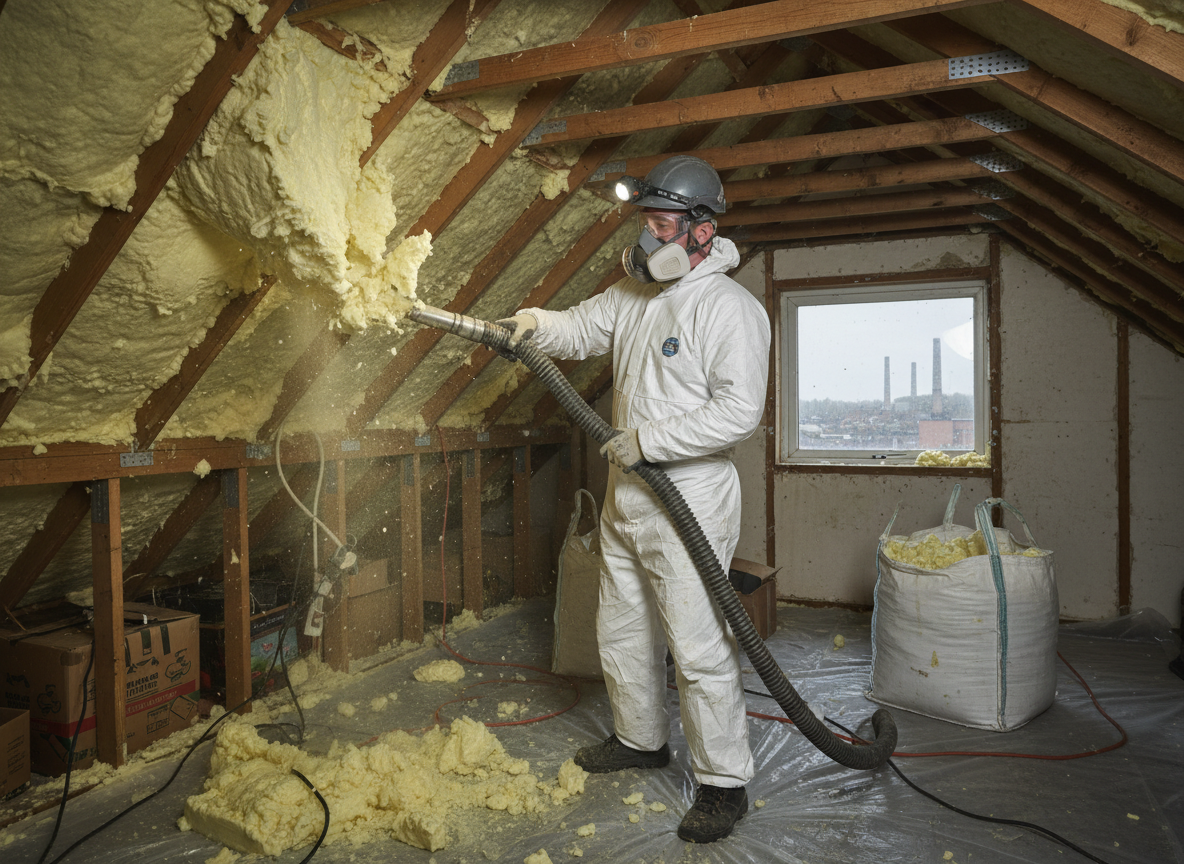
Open cell spray foam bonds tightly to timber joists and older plaster in Scunthorpe terraces built around the steel industry era. Its open structure absorbs moisture readily during the damp winters common along the Humber corridor, turning removal into a slow, layered process that risks pulling down ceiling laths if crews rush the scraping stage. Homeowners often discover the material has wicked water from minor roof leaks near the railway lines, leaving hidden rot that must be exposed and treated before any new insulation goes in.
Extraction crews working from the Crown Buildings base start by isolating the loft with poly sheeting to keep dust out of living spaces below. Hand tools and low-speed vacuums lift the foam in sections rather than tearing it, which prevents fragments from falling between floorboards in the narrow DN15 terraces. Disposal follows Environment Agency rules for construction waste, with loads taken to the licensed site at Winterton rather than mixed with household refuse.
Edge cases appear in post-war semis where foam was sprayed directly onto corrugated asbestos cement sheets in outbuildings; disturbing those panels requires licensed contractors before foam work can finish. Ventilation paths blocked by the original foam also need reopening to meet current Building Regulations for roof spaces, especially in properties close to the A18 where wind-driven rain increases condensation risk.
Technician insight
In Scunthorpe, the thing that catches most people out with open cell spray foam removal is how the foam has wicked moisture from the estuary climate into the original lath and plaster of 1930s terraces near the steelworks, so you end up treating hidden rot on the joists before you can even finish the extraction.
Foam Removal in a DN15 Terrace Loft
Homeowner noticed musty smell and sagging ceiling in Scunthorpe terrace. Inspection found open cell foam saturated from roof leak near the railway embankment. Crews isolated the space, removed foam in sections, treated exposed timber, and restored ventilation paths.
How it works
- 1
Initial Loft Inspection
Technicians assess foam depth, moisture levels, and access routes through the property in Scunthorpe.
- 2
Containment Setup
Dust barriers and negative air machines protect living areas from debris during removal.
- 3
Foam Extraction
Open cell material is cut and vacuumed in controlled sections to avoid structural damage.
- 4
Cleanup and Disposal
All residues are removed and waste is taken to licensed facilities in North Lincolnshire.
- 5
Final Ventilation Check
Airflow paths are verified to meet local building standards before handover.
Pricing
Upfront quotes after inspection, scaled to access difficulty and property age in Scunthorpe terraces.