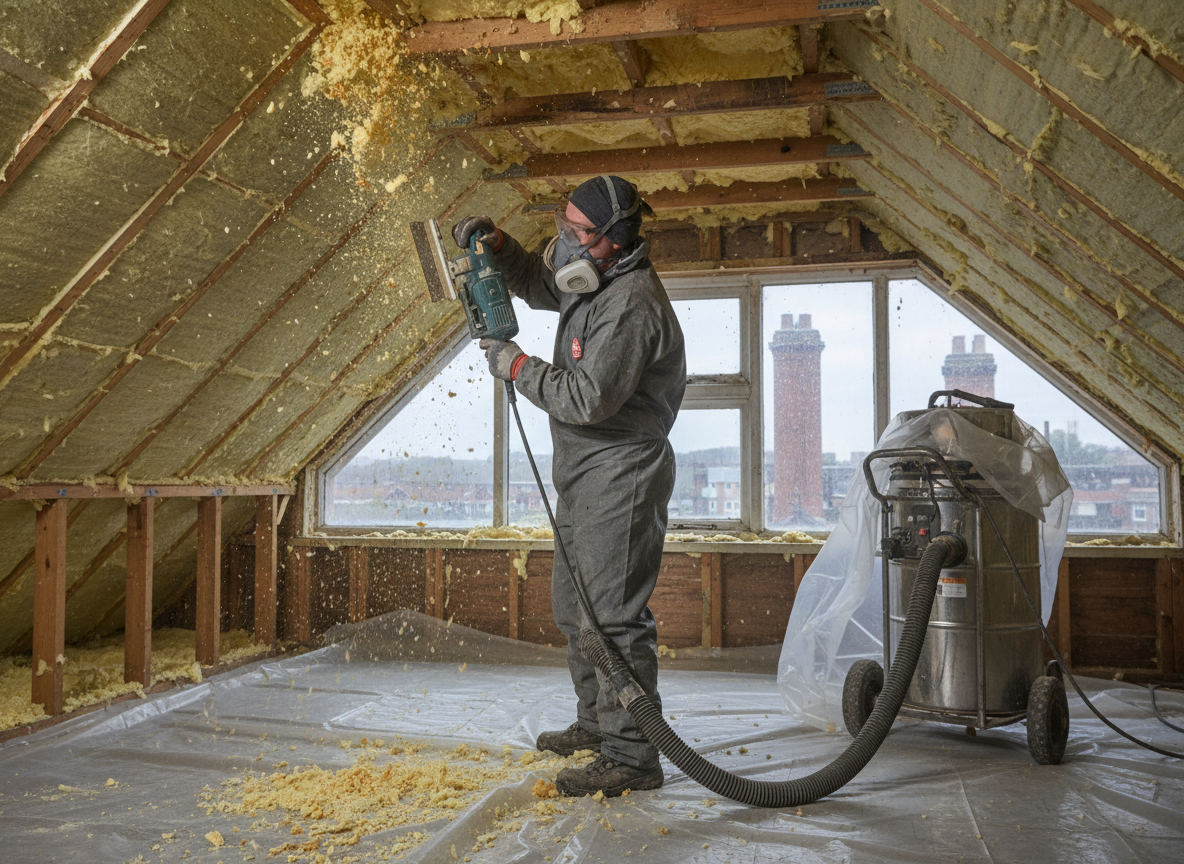
Spray foam insulation removal in Scunthorpe properties often involves older terraced and semi-detached homes common throughout North Lincolnshire where closed-cell foam was applied directly to rafters or joists decades ago. The work requires careful cutting and scraping to avoid damaging timber that has absorbed moisture from the region's frequent rainfall and high humidity. Technicians must also manage dust and debris containment because many Scunthorpe streets have narrow access and shared walls.
Edge cases arise when foam has been applied over electrical cables or pipework in lofts of post-war houses around Scunthorpe. In these situations the removal process includes isolating circuits and protecting services before any mechanical extraction begins. Homeowners sometimes discover hidden condensation issues once the foam is gone, particularly in properties near the River Trent where ground conditions stay damp for much of the year.
Handling Hidden Moisture Damage
After foam removal, crews routinely inspect rafters and ceiling joists for rot that developed because the original foam sealed in damp air. In North Lincolnshire homes this often shows up as discoloured timber near roof valleys or chimney stacks that receive little airflow.
Waste Disposal and Site Protection
All removed foam and contaminated materials are bagged on site and taken to licensed facilities rather than left in skips on Scunthorpe streets. Floor protection and dust sheeting are standard because many local properties have open stairwells that carry dust into living areas.
Technician insight
In Scunthorpe the thing that catches most people out with spray foam insulation removal is how quickly hidden rot appears once the foam comes off older terraced roofs near the town centre. The frequent rain and limited loft ventilation in North Lincolnshire stock means moisture stays trapped against rafters for years. We always budget extra time to check every timber before we leave.
Foam Removal in Scunthorpe Terrace Loft
Homeowner noticed musty smell and staining on bedroom ceiling in a 1960s terrace off Doncaster Road. Inspection found closed-cell foam had trapped condensation against rafters. Crew isolated electrics, removed foam in sections, treated surface mould and disposed of waste. Ceiling now open for new ventilation and insulation.
How it works
- 1
Initial Inspection
Assess foam type, depth, and any concealed services or damage in the Scunthorpe property loft or walls.
- 2
Site Preparation
Protect floors, electrics and access routes then set up containment to control dust and debris.
- 3
Mechanical Removal
Cut, scrape and extract foam using specialist tools while monitoring for hidden moisture or rot.
- 4
Cleanup and Disposal
Remove all waste from site, vacuum remaining particles and leave the area ready for new insulation or inspection.
Pricing
Upfront quotes based on property size, foam thickness and access difficulty; no hidden charges.