2026-10-22 ·
Common Issues with Spray Foam in North Lincolnshire Homes
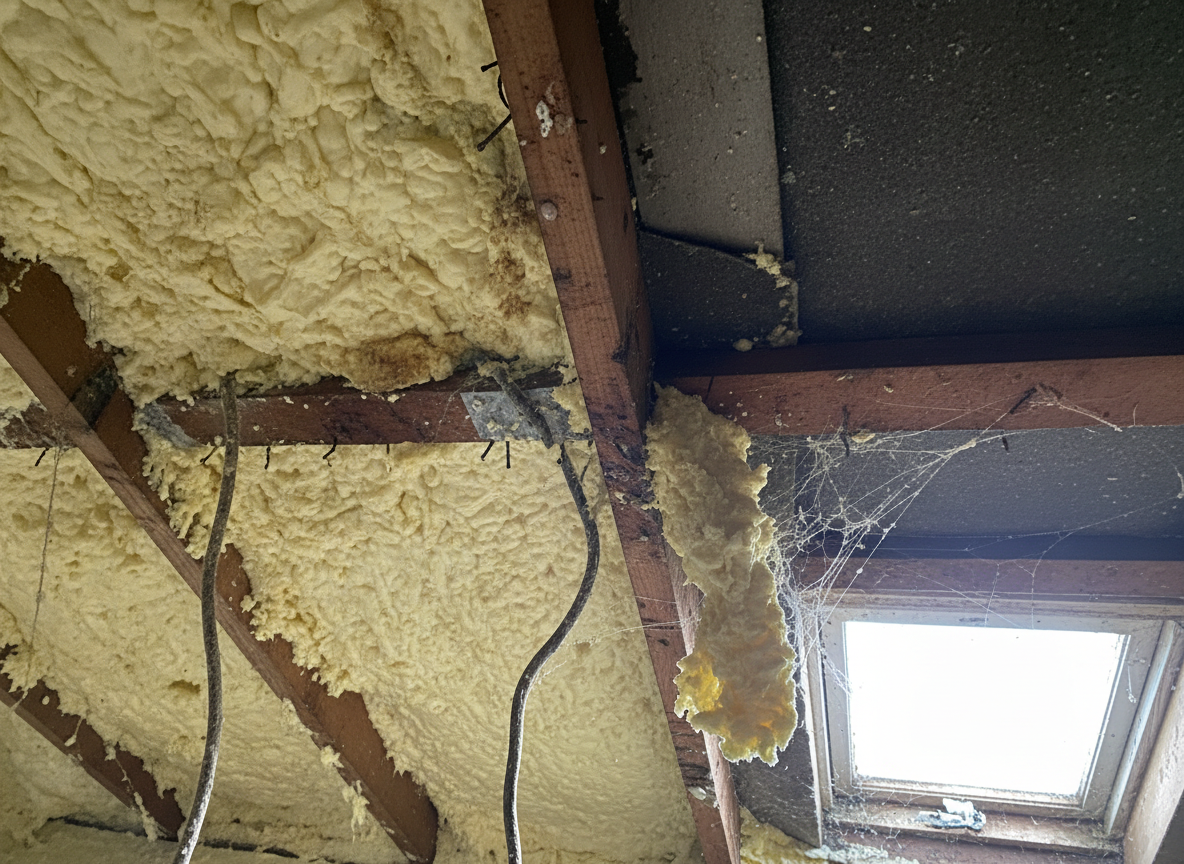
Spray foam insulation in North Lincolnshire homes commonly creates moisture trapping and timber decay within 7–12 years, particularly in Scunthorpe properties built before 1970 where ventilation was never designed for sealed roof spaces.
Moisture Trapping in Scunthorpe Lofts
North Lincolnshire experiences frequent winter rainfall and high humidity that forces condensation against sealed spray foam layers. In Scunthorpe terraced houses and post-war semis around the town centre, this leads to rot in rafters and joists because the foam prevents any airflow that older roof designs relied on. Homeowners near the River Trent often notice black mould forming along ceiling edges after the first two cold seasons. The same pattern appears in Brigg and Winterton where similar 1950s–1960s stock received foam upgrades in the 2000s. Once water sits trapped, removal becomes necessary to prevent further spread into load-bearing timbers.
Ventilation Failures in Older North Lincolnshire Properties
Many Scunthorpe homes from the inter-war and immediate post-war periods have small, fixed roof vents that spray foam quickly blocks. Without those airways, warm air from living spaces rises and condenses on the cold underside of the roof, accelerating decay along the ridge and eaves. Properties in Crowle and Epworth show the same pattern because their slate roofs sit low and receive less natural drying wind. Closed-cell foam exacerbates the problem by creating an impermeable barrier that older breathable underlays cannot compensate for. Over time the insulation itself can detach in sheets when underlying timber softens.
Structural and Access Challenges in Local Housing Stock
Scunthorpe’s older brick terraces and semi-detached homes often feature narrow loft hatches and low roof pitches that make any later inspection difficult once foam has been applied. When decay sets in, joist ends near the wall plate are the first to weaken, especially in areas with clay soil that holds groundwater longer after rain. Loft spray foam removal crews working in these spaces routinely find that foam must be cut away in sections rather than peeled because it bonds tightly to both timber and felt. Similar access limits appear in Barton-upon-Humber properties where converted roof spaces leave even less room for equipment.
Health and Long-Term Maintenance Concerns
Residents in North Lincolnshire report musty odours and increased allergy symptoms once foam begins to degrade and trap organic material. In colder months the temperature differential between the heated house and the unventilated loft space widens, pushing more moisture upward. When to Consider Spray Foam Removal in Older Scunthorpe Properties outlines the typical timeline for these changes. Professional assessment becomes essential once staining appears on ceilings or when mortgage surveys flag the insulation type. Insulation assessment visits allow crews to check timber condition without full removal first.
Practical Next Steps for Homeowners
Scunthorpe homeowners facing these issues benefit from contacting FreshLayer Experts at Crown Buildings, Laneham Street, available 24/7 for initial site visits. Early inspection prevents small moisture pockets from reaching load-bearing members. Removing Spray Foam from Attics: What Scunthorpe Homeowners Should Know details the sequence of safe extraction methods suited to local roof constructions. Addressing the problem before winter returns reduces the chance of further condensation cycles damaging insulation and timber alike.