2026-10-22 ·
How Cold Winters in North Lincolnshire Affect Spray Foam Insulation
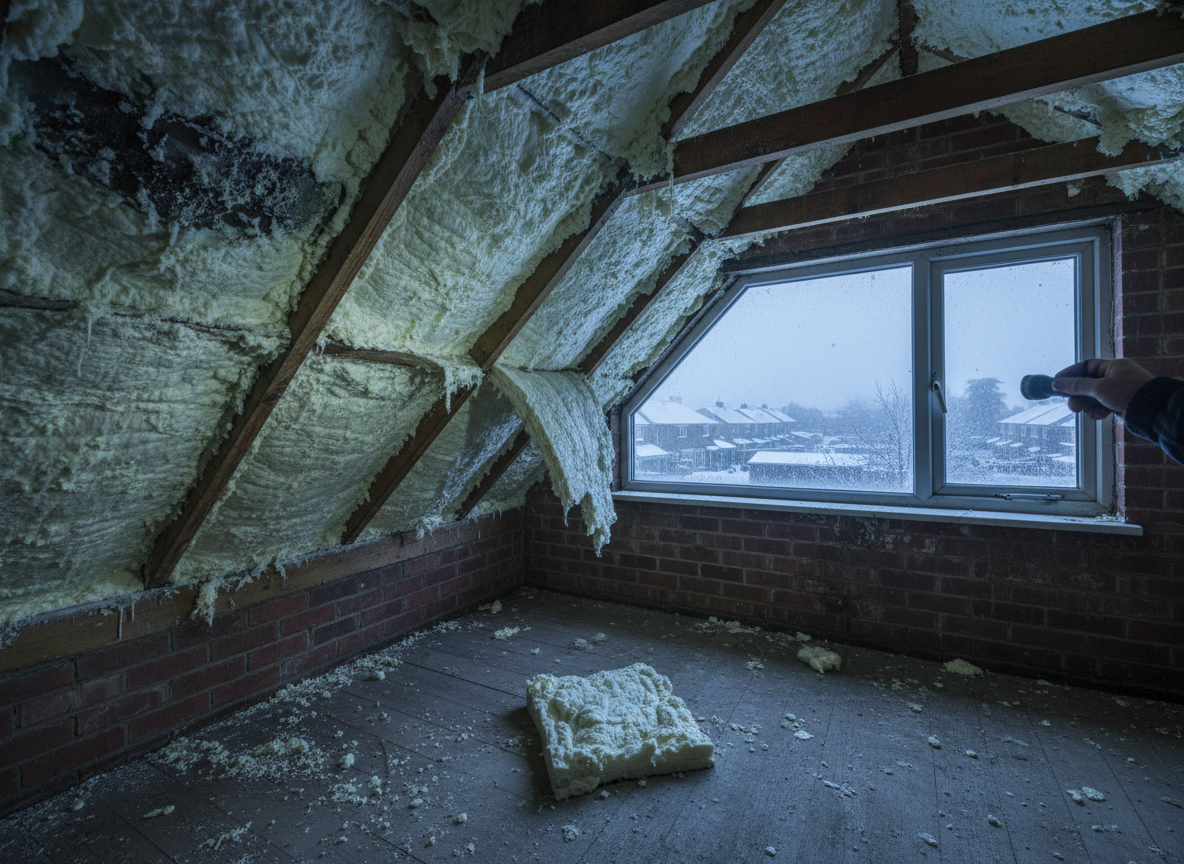
Cold winters in North Lincolnshire cause spray foam insulation to contract and develop gaps that reduce its ability to block heat loss in Scunthorpe homes. This happens because repeated freeze-thaw cycles stress the material, especially in lofts and attics exposed to sub-zero conditions typical from December through February.
Thermal Contraction During North Lincolnshire Winters
Temperatures in the Scunthorpe area frequently drop below freezing for extended periods, making the foam shrink and pull away from rafters or joists. This creates small voids where warm air escapes and cold air enters, increasing heating demands in homes built before the 1980s. Older terraces and semi-detached houses common around Laneham Street and nearby streets experience these shifts more because their original roof structures were never designed for modern insulation layers. Over multiple seasons the repeated movement weakens adhesion, leaving visible cracks that worsen each winter.
Moisture and Condensation Buildup in Local Lofts
When spray foam contracts, warm indoor air meets colder surfaces in the roof space and forms condensation that soaks into timbers and plaster. Scunthorpe's damp winters, combined with occasional heavy rain, trap this moisture and encourage mould growth on ceiling joists. Properties in surrounding villages such as Winterton and Crowle show the same pattern because their lofts often lack adequate ventilation once foam was added. Persistent damp can lead to timber decay if left unaddressed through several cold seasons.
Challenges in Older Scunthorpe Housing Stock
Many homes in Scunthorpe and Brigg date from the early to mid-20th century and received spray foam upgrades without addressing underlying roof defects. Cold weather highlights these shortcomings when contraction opens pathways for water ingress around chimneys and valleys. The clay soils and flat terrain around North Lincolnshire also mean poor drainage can compound loft dampness during winter thaws. These conditions make regular inspection important before minor gaps turn into larger structural concerns.
Practical Steps When Issues Appear
Homeowners notice higher energy bills or musty smells in the loft after cold snaps and should arrange an insulation assessment to check foam condition. Removing compromised material prevents further damage to roof timbers and restores proper airflow. Spray foam insulation removal addresses these winter-related failures directly. For properties where foam was installed in attics, targeted attic spray foam removal restores the original roof performance without affecting living spaces below.
Long-Term Considerations for North Lincolnshire Properties
Continued exposure to the region's freeze-thaw pattern shortens the useful life of spray foam compared with milder parts of the UK. Common issues with spray foam in North Lincolnshire homes often trace back to winter contraction that went unnoticed for several years. In older Scunthorpe houses, removal followed by traditional insulation or ventilation upgrades provides a more durable solution. When to consider spray foam removal in older Scunthorpe properties outlines the signs that winter damage has reached the point where professional intervention is required.